
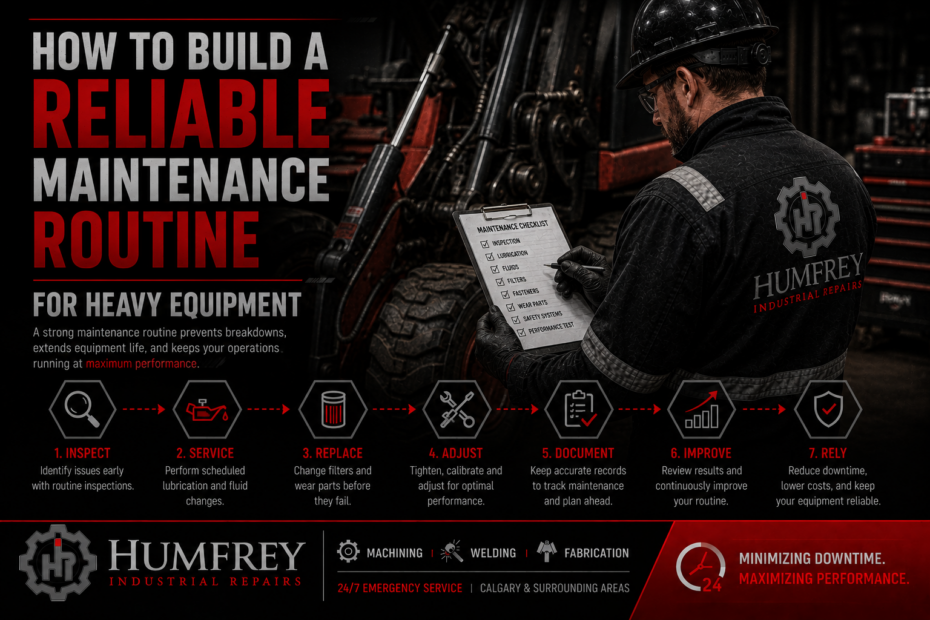
Why Every Piece of Heavy Equipment Needs a Maintenance Routine
A reliable heavy equipment maintenance routine is one of the most valuable investments a business can make. Whether you’re operating excavators, loaders, skid steers, agricultural machinery, or industrial equipment, reliability directly impacts productivity, profitability, and job site safety.
Unfortunately, many equipment failures occur not because machines reach the end of their lifespan, but because small maintenance issues go unnoticed until they become major problems.
Creating a heavy equipment maintenance routine helps prevent unexpected breakdowns, reduce repair costs, and extend the life of critical machinery.
At Humfrey Industrial Repair, we regularly see how preventative maintenance can save businesses thousands of dollars by identifying issues before they result in costly downtime.
The Benefits of a Heavy Equipment Maintenance Routine
A structured maintenance program provides several advantages:
- Reduced equipment downtime
- Lower long-term repair costs
- Improved equipment performance
- Increased workplace safety
- Longer equipment lifespan
- Better operational planning
When maintenance becomes part of everyday operations, businesses can avoid many of the costly surprises associated with emergency repairs.
Step 1: Follow Manufacturer Maintenance Recommendations
The foundation of every successful heavy equipment maintenance routine starts with the manufacturer’s service guidelines.
Equipment manufacturers provide recommended intervals for:
- Oil changes
- Hydraulic fluid replacement
- Filter changes
- Greasing schedules
- Belt inspections
- Cooling system maintenance
- Component inspections
These recommendations are based on extensive testing and should serve as the baseline for your maintenance program.
However, equipment operating in Alberta’s demanding environments may require more frequent inspections due to extreme temperatures, dust, mud, and heavy workloads.
Step 2: Conduct Daily Equipment Inspections
Daily inspections are one of the simplest and most effective ways to identify potential issues before they become serious failures.
Operators should inspect equipment before each shift and look for:
- Fluid leaks
- Loose fasteners
- Damaged hoses
- Cracked welds
- Tire or track wear
- Unusual noises
- Hydraulic performance issues
A five-minute inspection can often prevent days of downtime later.
Step 3: Monitor Hydraulic Systems Closely
Hydraulic systems are essential to the performance of many types of heavy equipment.
Regular inspections should include:
- Hydraulic hose condition
- Cylinder performance
- Fluid levels
- Signs of leaks
- Pressure irregularities
- Seal wear
Hydraulic problems rarely improve on their own. Early detection can prevent expensive repairs and unexpected equipment failures.
Step 4: Track Equipment Operating Hours
Maintenance schedules should be based on actual equipment usage rather than calendar dates alone.
Tracking operating hours allows businesses to schedule:
- Oil changes
- Filter replacements
- Component inspections
- Hydraulic servicing
- Wear part replacement
Many modern machines include built-in hour meters that make tracking maintenance intervals easier and more accurate.
Step 5: Keep Equipment Clean
Clean equipment is easier to inspect and maintain.
Dirt, debris, and contaminants can hide developing issues such as:
- Hydraulic leaks
- Structural cracks
- Loose components
- Excessive wear
Regular cleaning also prevents contaminants from entering sensitive systems and improves overall equipment reliability.
Step 6: Document Maintenance Activities
One of the most overlooked aspects of a heavy equipment maintenance routine is record keeping.
Maintenance logs should include:
- Inspection dates
- Completed repairs
- Fluid changes
- Component replacements
- Operator observations
- Service intervals
Accurate records help identify recurring problems, improve planning, and support equipment resale value.
Step 7: Address Small Problems Immediately
One of the biggest mistakes equipment owners make is delaying minor repairs.
A small hydraulic leak can become a failed cylinder.
A cracked weld can become a structural failure.
A worn bearing can damage multiple components throughout a machine.
Addressing issues early is almost always less expensive than waiting for a major breakdown.
Step 8: Schedule Professional Inspections
Even experienced operators can miss developing problems.
Periodic inspections by qualified repair professionals help identify:
- Structural wear
- Hydraulic system issues
- Machining requirements
- Component fatigue
- Alignment problems
- Safety concerns
Professional assessments often uncover issues that are not immediately visible during daily inspections.
Common Signs Your Maintenance Routine Needs Improvement
If your equipment experiences any of the following, your maintenance strategy may need adjustment:
- Frequent breakdowns
- Increasing repair costs
- Excessive downtime
- Hydraulic failures
- Poor equipment performance
- Shortened component lifespan
These symptoms often indicate that inspections or servicing are occurring too infrequently.
How Humfrey Industrial Repair Supports Equipment Maintenance Programs
At Humfrey Industrial Repair, we help Alberta businesses maintain equipment reliability through expert repair and maintenance services.
Our capabilities include:
Hydraulic Cylinder Repair and Rebuilding
Routine cylinder inspections and repairs help prevent costly hydraulic failures.
Precision Machining Services
Machining worn components can restore performance and extend equipment lifespan.
Welding and Structural Repairs
Early repairs prevent small cracks and structural issues from becoming major failures.
Custom Fabrication Solutions
When replacement parts are unavailable, custom fabrication helps keep equipment operational and productive.
Building a Long-Term Maintenance Strategy
A reliable heavy equipment maintenance routine is not about reacting to failures—it’s about preventing them.
The most successful maintenance programs combine:
- Daily inspections
- Scheduled servicing
- Accurate record keeping
- Professional evaluations
- Prompt repairs
Together, these practices reduce downtime, improve equipment performance, and protect valuable assets.
Final Thoughts
Building a reliable heavy equipment maintenance routine is one of the best investments any equipment owner can make. Regular inspections, proactive servicing, and timely repairs help reduce downtime, improve safety, and extend equipment life.
At Humfrey Industrial Repair, we work with businesses throughout Alberta to keep heavy equipment operating at peak performance through expert repair, machining, fabrication, welding, and hydraulic services.
When it comes to equipment reliability, consistent maintenance is always more cost-effective than unexpected downtime.