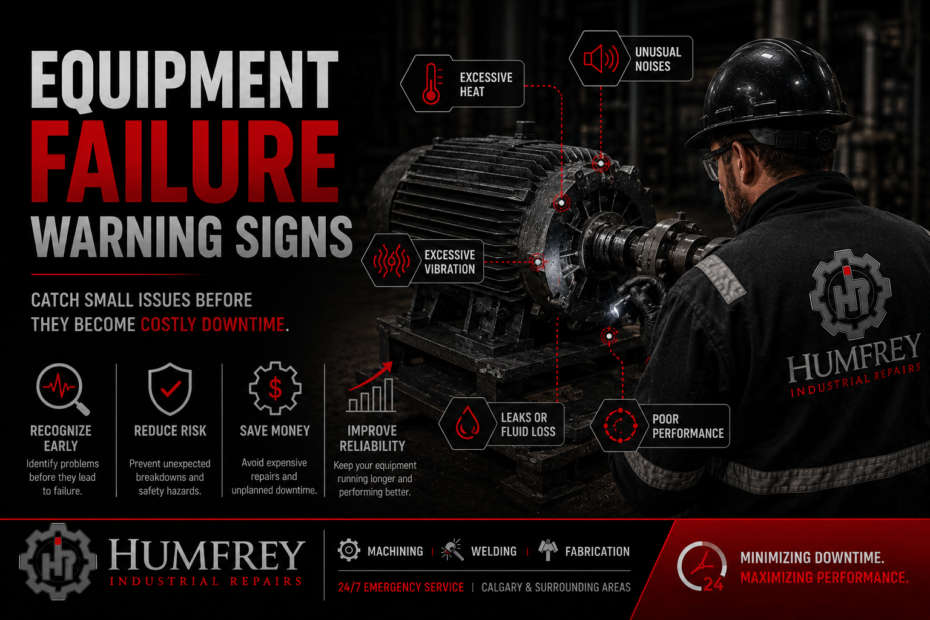
Equipment Failure Warning Signs Every Operator Should Know
Heavy equipment is designed to handle demanding workloads, but every machine has limits. Ignoring early equipment failure warning signs can lead to catastrophic breakdowns, expensive repairs, extended downtime, and serious safety hazards.
Many operators continue using equipment after noticing unusual symptoms, hoping to finish a job before addressing the issue. Unfortunately, what begins as a minor problem can quickly become a major failure that costs thousands of dollars and takes critical equipment out of service.
At Humfrey Industrial Repair, we’ve seen firsthand how early intervention can prevent extensive damage. Knowing when to shut equipment down can save both time and money.
Why Continuing to Operate Damaged Equipment Is Risky
When machinery begins showing signs of failure, internal components are often already experiencing excessive stress. Continuing to operate the equipment can accelerate wear and cause secondary damage to surrounding systems.
A worn hydraulic component may lead to cylinder failure. A small crack in a structural component can become a major fracture. A bearing issue can damage shafts, housings, and other expensive parts.
Recognizing equipment failure warning signs early allows repairs to be completed before the damage spreads.
1. Unusual Noises That Weren’t There Before
One of the most common equipment failure warning signs is the appearance of new or unusual sounds.
Watch for:
- Grinding noises
- Knocking sounds
- Squealing belts
- Metal-on-metal contact
- Excessive vibration accompanied by noise
These sounds often indicate worn bearings, damaged gears, loose components, or lubrication issues.
If the noise is sudden or becomes progressively worse, the equipment should be shut down and inspected immediately.
2. Hydraulic Leaks or Pressure Loss
Hydraulic systems are critical to many types of heavy equipment. Small leaks can quickly develop into major failures if ignored.
Signs of hydraulic problems include:
- Visible hydraulic fluid leaks
- Reduced lifting power
- Slow cylinder movement
- Inconsistent performance
- Pressure fluctuations
Operating equipment with hydraulic issues can damage pumps, cylinders, seals, and other system components.
If hydraulic performance changes noticeably, it is often best to stop operation until the issue is diagnosed.
3. Excessive Heat
Equipment that runs hotter than normal is often warning operators that a problem is developing.
Potential causes include:
- Insufficient lubrication
- Bearing failure
- Hydraulic restrictions
- Cooling system issues
- Excessive friction
Overheating can damage critical components and significantly shorten equipment life.
If temperatures rise outside normal operating ranges, continuing operation may cause irreversible damage.
4. Visible Cracks or Structural Damage
Structural cracks should never be ignored.
Inspect equipment regularly for:
- Cracked welds
- Frame damage
- Bent components
- Stress fractures
- Structural deformation
Even small cracks can spread rapidly under heavy loads.
When structural damage is discovered, equipment should be removed from service until repairs can be completed safely.
5. Excessive Vibration
While some vibration is normal, sudden increases often indicate mechanical problems.
Excessive vibration may be caused by:
- Imbalanced rotating components
- Bearing wear
- Misalignment
- Damaged shafts
- Loose hardware
Vibration can accelerate wear throughout an entire machine and often signals developing mechanical failure.
6. Declining Equipment Performance
Machines rarely lose performance without a reason.
Common symptoms include:
- Reduced operating speed
- Loss of power
- Increased fuel consumption
- Slower hydraulic functions
- Difficulty maintaining normal workloads
These changes often indicate wear or damage that requires immediate attention.
Continuing to push equipment beyond its current condition can significantly increase repair costs.
7. Fluid Contamination
Equipment fluids provide valuable insight into machine health.
Watch for:
- Metal particles in oil
- Milky hydraulic fluid
- Burnt-smelling lubricants
- Discolored fluids
- Excessive contamination during maintenance inspections
Contaminated fluids often indicate internal component wear or system failures already in progress.
How Humfrey Industrial Repair Helps Prevent Major Failures
When equipment failure warning signs appear, prompt repairs can prevent much larger problems.
Humfrey Industrial Repair provides services including:
- Hydraulic cylinder repair and rebuilding
- Precision machining and component restoration
- Welding and structural repairs
- Custom fabrication solutions
- Industrial equipment repair and refurbishment
Addressing issues early often reduces repair costs and minimizes downtime.
The Cost of Waiting Too Long
Many equipment owners delay repairs because the machine is still operational.
However, a component that costs hundreds of dollars to repair today may require thousands of dollars in repairs after a major failure.
Early action helps:
- Reduce downtime
- Prevent secondary damage
- Improve safety
- Extend equipment life
- Lower overall maintenance costs
The sooner warning signs are addressed, the better the outcome.
Final Thoughts
Recognizing equipment failure warning signs can prevent expensive breakdowns and improve workplace safety. Unusual noises, hydraulic leaks, excessive heat, vibration, structural damage, and declining performance should never be ignored.
If your equipment is showing any of these symptoms, stopping operation and scheduling an inspection may prevent a much larger repair in the future.
At Humfrey Industrial Repair, we help Alberta businesses diagnose, repair, and restore critical equipment before minor issues become major failures.